Half the Dose, Half the Bill? The Untold Story of America's Pill-Splitting Economy
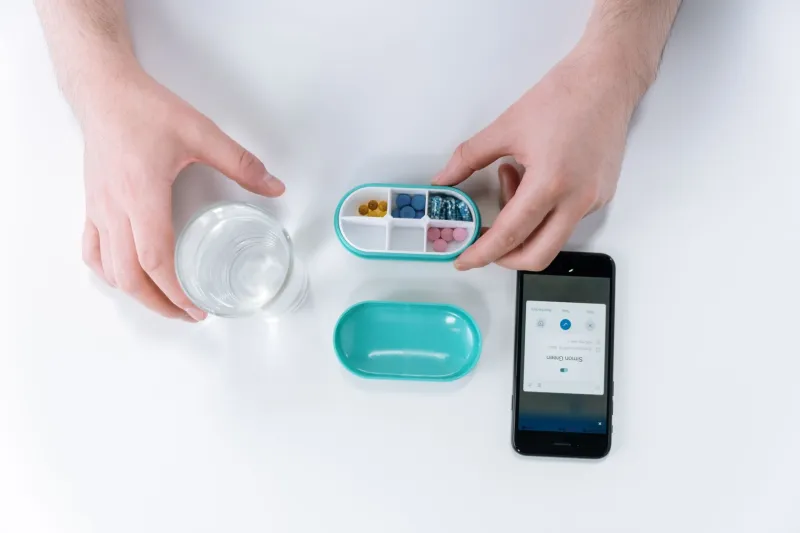
Walk through the math that drives millions of Americans to a $7 pill cutter: a 20 mg tablet and a 10 mg tablet of the same drug often cost nearly the same. Buy the higher strength, split it in half, and you've effectively halved your price per dose. For retirees on fixed incomes and patients paying cash for medications not covered by their plan, the savings can total hundreds of dollars a year.
The practice is widespread, frequently tolerated by prescribers, and almost never discussed openly at the pharmacy counter. That silence is worth examining.
Why the Gray Zone Exists
No federal law prohibits patients from splitting their own tablets. But manufacturers formulate and test their products at the strength printed on the label. When a patient halves a pill, they're operating outside the validated design — which is why drugmakers don't endorse it, and why some pharmacies decline to split tablets on-site, citing liability concerns.
Some prescribers deliberately write prescriptions for double the needed strength with instructions to take half a tablet. Others forbid splitting entirely. The inconsistency leaves patients to figure out on their own which category their medication falls into — a task better handled with professional guidance than guesswork.
Medications That Are Generally Safe to Split
When a prescriber approves it, plain, immediate-release, scored tablets split most predictably:
- Many statins, such as atorvastatin and simvastatin
- Certain blood pressure medications in immediate-release form
- Some antidepressants with scored, non-coated tablets
- Select medications specifically designed with score lines for splitting
A score line is a useful hint but not a guarantee — some scored tablets still shouldn't be divided.
Medications That Should Never Be Split
Splitting certain formulations doesn't just reduce the dose unevenly; it can release the full drug payload at once, with dangerous consequences:
- Extended-release and sustained-release tablets. Crushing or splitting destroys the release mechanism, dumping the entire dose into the bloodstream at once.
- Enteric-coated tablets. The coating protects the stomach or protects the drug from stomach acid; breaking it defeats that purpose.
- Capsules. Many contain beads or granules engineered for timed release.
- Combination products. The two drugs may not be distributed evenly, so half a tablet is not half of each ingredient.
- Sublingual, buccal, and dispersible forms. These are designed for specific absorption routes.
- Narrow therapeutic index drugs. Medications like warfarin, levothyroxine, and certain seizure drugs require dose precision that even a well-cut tablet can't guarantee.
The Accuracy Problem Nobody Mentions
Even with approved tablets, splitting is imprecise. Studies have found dose variations of 15 to 25 percent or more with a knife, and less — but still measurable — variation with a proper splitter. For a cholesterol medication, that variability may be inconsequential. For other drugs, it matters.
A Checklist Before You Split Anything
- Confirm with your prescriber or pharmacist that your specific medication and formulation can be split.
- Check the label for 'extended-release,' 'ER,' 'XR,' 'SR,' 'enteric-coated,' or 'EC' — treat these as stop signs.
- Use a pill splitter, not a knife or your fingers.
- Split only immediately before taking, not a month's supply at once — exposure to air and moisture degrades some drugs.
- Verify your dosing instructions match the split plan; a 'take half tablet' instruction should appear on the label.
- Recalculate your actual savings — sometimes a generic at the lower strength costs less than the hassle.
Pill splitting can be a legitimate strategy for stretching a budget. But it belongs in the same conversation as every other medication decision: made with a professional, not in isolation.