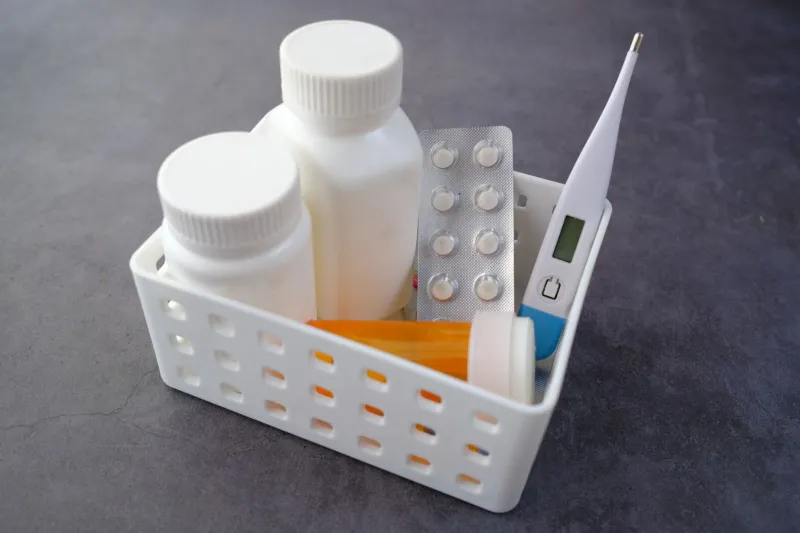
What Becomes of Your Medical Records After an Online Pharmacy Order: The Data Trail Most Patients Never Think to Question
For millions of Americans, the appeal of ordering medications online is straightforward: convenience, competitive pricing, and a degree of privacy that a neighborhood drugstore simply cannot offer. Yet very few patients pause to ask what happens to their information once the transaction is complete. Where does your prescription data go? Who can access it? How long is it retained — and under what circumstances might it be shared?
These are not paranoid questions. They are the questions of an informed healthcare consumer, and every online pharmacy worth trusting should be prepared to answer them plainly.
The Moment You Submit: What Data Is Captured
The data lifecycle begins before your medication ever ships. When you upload a prescription, enter your date of birth, or provide insurance information, you are generating a structured medical record. Reputable online pharmacies — those operating under proper licensure in the United States — are required to collect certain data elements to verify your identity, confirm the legitimacy of your prescription, and process payment.
This typically includes your full legal name, mailing address, date of birth, prescribing physician's information, the medication itself, dosage, and refill history. In some cases, especially when a licensed pharmacist conducts a consultation, notes from that interaction are also logged.
At MedIQ Shop, this data collection is treated not as a routine formality but as a responsibility. Patients ordering sensitive medications — whether for erectile dysfunction, hormonal health, or other conditions that carry social stigma — deserve to know that their information is handled with the same discretion they expect from their delivery packaging.
HIPAA and the Online Pharmacy: What the Law Actually Requires
The Health Insurance Portability and Accountability Act, better known as HIPAA, establishes the federal floor for how protected health information (PHI) must be managed. Any licensed pharmacy operating in the United States — digital or physical — qualifies as a "covered entity" under HIPAA, meaning it is legally bound by these standards.
In practical terms, this means online pharmacies must implement technical safeguards such as data encryption, restrict internal access to PHI on a need-to-know basis, and maintain detailed records of who accessed what information and when. They are also required to provide patients with a Notice of Privacy Practices — a document that explains, in plain language, how your data may be used and disclosed.
However, compliance is not uniformly enforced, and the gap between what the law requires and what individual companies actually practice can be significant. Patients should look for pharmacies that go beyond the legal minimum: those that publish clear, readable privacy policies rather than burying disclosures in dense legal text.
Data Retention: How Long Your Records Stay on File
This is where many patients are surprised. Federal and state regulations generally require pharmacies to retain prescription records for a minimum of two years, though many states extend that requirement to five or even ten years. Some states mandate permanent retention for controlled substances.
For consumers, this means that a prescription filled years ago may still exist in a pharmacy's database today. The question is not simply whether the data is stored, but how it is stored and who can reach it.
Secure online pharmacies archive older records in encrypted, access-restricted environments, separating them from active operational systems. This compartmentalization limits exposure in the event of a data breach. Less rigorous operators, by contrast, may keep all records — recent and historical — in a single, more accessible database, increasing vulnerability.
When evaluating an online pharmacy, it is worth asking directly: What is your data retention schedule? Are archived records encrypted separately from active records? These questions reveal a great deal about an organization's actual commitment to patient privacy.
Third-Party Sharing: The Part of the Privacy Policy Nobody Reads
Perhaps the most consequential section of any pharmacy's privacy policy is the one governing third-party data sharing. HIPAA permits covered entities to share PHI with "business associates" — vendors, technology partners, payment processors, and others who support pharmacy operations — provided those associates sign formal agreements committing them to equivalent privacy protections.
What HIPAA does not prohibit, however, is the sharing of de-identified data. Information stripped of direct identifiers — name, address, date of birth — can legally be shared or sold without patient consent. This data is enormously valuable to pharmaceutical companies, insurers, and market research firms, and its trade is a largely invisible industry.
Transparent pharmacies disclose whether they participate in de-identified data sharing. They also clarify whether their marketing partners receive any information about your purchase history — even in aggregated form. If a pharmacy's privacy policy is vague on these points, that ambiguity is itself informative.
Breach Notification: Your Rights When Something Goes Wrong
Even well-defended systems are not invulnerable. Under HIPAA's Breach Notification Rule, covered entities must notify affected individuals within 60 days of discovering a breach involving their PHI. If the breach affects more than 500 residents of a given state, the relevant state attorney general must also be notified, and the breach becomes a matter of public record.
This accountability mechanism is meaningful, but 60 days is a long window. In the interim, compromised data can circulate widely. Pharmacies that invest in real-time monitoring and anomaly detection systems — rather than relying solely on reactive breach discovery — offer substantially stronger protection.
Patients should also know that they have the right to request an accounting of disclosures: a formal record of every time their PHI was shared outside of routine treatment, payment, and operations purposes. This right exists regardless of where you fill your prescriptions, and exercising it is entirely within your legal purview.
What Sets Trustworthy Online Pharmacies Apart
The distinction between a privacy-respecting online pharmacy and one that merely complies with the minimum legal requirements comes down to several observable factors.
First, look for verifiable licensure. Legitimate US-based online pharmacies are licensed in the states where they operate and are typically verified by the National Association of Boards of Pharmacy (NABP). Second, examine the privacy policy for specificity — vague language around data sharing is a warning sign. Third, consider whether the pharmacy offers secure, encrypted communication channels for submitting prescriptions and conducting consultations.
At MedIQ Shop, these standards are not aspirational — they are operational. Patients who order medications for conditions they might not discuss openly with friends or family deserve a pharmacy that protects their information with the same care it applies to every other aspect of the transaction.
The Informed Patient's Checklist
Before placing your next online prescription order, consider running through the following questions:
- Is this pharmacy licensed and verifiable through the NABP or your state board of pharmacy?
- Does the privacy policy clearly explain data retention periods and third-party sharing practices?
- Is PHI transmitted and stored using current encryption standards?
- Does the pharmacy offer a Notice of Privacy Practices upon request?
- Is there a clear process for requesting access to your own records or an accounting of disclosures?
These are not bureaucratic formalities. They are the structural elements of a trustworthy relationship between patient and provider — one that should feel no different simply because the pharmacy exists online rather than on a street corner.
Your medication history is among the most sensitive data you generate. Treating it accordingly is not overcaution. It is sound judgment.