Faster Is Not Safer: The Case Against Same-Day Prescription Delivery
There is a version of the same-day delivery pitch that sounds irresistible: upload a prescription at lunch, and by dinner a courier is at the door. In a country where the average pharmacy wait is measured in patience and where a single missed dose can derail a treatment plan, the appeal is obvious.
It is also, in most circumstances, the wrong trade.
Speed is not a neutral feature bolted onto a pharmacy. Every hour removed from the process is an hour taken from somewhere — verification, screening, packaging, or the driver's route. The question worth asking is not whether same-day delivery is convenient, because it plainly is. The question is whether the hours it eliminates were doing useful work. In most prescription transactions, they were.
The Convenience Argument, Stated Fairly
Advocates of expedited delivery are not being unreasonable. For a parent managing a sick child, for a patient discharged from an emergency department at 9 p.m., for someone without a car in a transit desert, the difference between tonight and Thursday is a real clinical difference. Online pharmacies built their reputation partly on removing the friction of the counter visit, and fast shipping is a natural extension of that promise.
But convenience has a way of migrating. A service designed for urgency inevitably becomes the default, and defaults are where safety assumptions calcify.
Where the Hours Actually Go
A prescription is not a parcel that gets picked. It passes through clinical review: the pharmacist confirms the drug, dose, and directions match the prescriber's intent; screening flags interactions with the patient's other medications; state prescription monitoring databases are checked where required. If something looks wrong — an unusual quantity, an allergy conflict, a therapy duplication — a call goes out to the prescriber, and that call may not be returned for hours.
A reasonable turnaround absorbs that call. An aggressive same-day promise pressures the system to resolve ambiguity faster than ambiguity deserves. Most pharmacists will not cut corners, and that is precisely the point: when the promise cannot be met safely, the promise breaks instead, and the patient learns at 6 p.m. that the order is not coming. The reliability of a two- or three-day window is underrated. Certainty is worth more than a collapsed estimate.
The Porch Is Not a Pharmacy
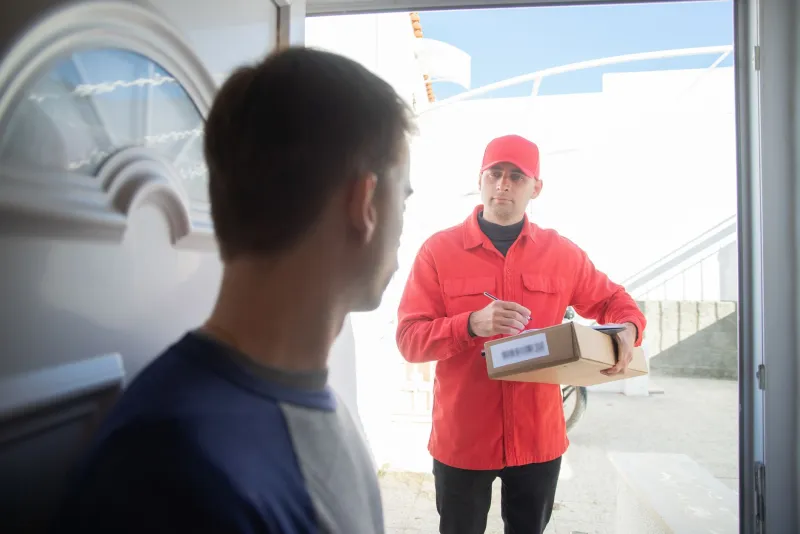
A courier handoff feels secure because someone is holding the box. The final five feet, however, are the least controlled part of the journey. Packages left at doors are vulnerable to theft, to weather, and to the particular hazard of temperature-sensitive medication sitting in sun or freezing air for hours.
Expedited shipping does not solve the porch problem; it narrows the window in which a patient can arrange to be home, which in practice means more parcels are left unattended. Same-day couriers often arrive within a much shorter and less predictable span, making it harder to plan around them. A signature requirement helps, but it can also mean a failed delivery and a redelivery the next day — the opposite of speed.
Discretion Is Easier to Break Than to Keep
Patients ordering sensitive medication rely on packaging that reveals nothing to a roommate, a family member, or a neighbor. Discreet outer packaging is standard practice at reputable online pharmacies, including MedIQ Shop, but the pressure of same-day logistics can erode it. Courier networks that mix pharmacy parcels with general commerce sometimes apply their own labels, and a delivery app notification can broadcast a pharmacy name to whoever shares the household.
That is a privacy cost paid by the patient, not the vendor, and it is rarely mentioned in the marketing.
The Costs Nobody Itemizes
Same-day delivery is expensive to operate, and the expense does not vanish. It appears as a fee, a membership tier, a higher product price, or an order minimum that pushes patients toward buying more medication than they need — which creates its own waste when bottles expire unopened.
There is also the carbon arithmetic. Individual courier trips are far less efficient per parcel than consolidated routes, and the emissions add up across millions of small deliveries. A three-day ground shipment is not zero-impact, but it is measurably lighter.
When Same-Day Earns Its Keep
The case against expedited delivery is not absolute, and pretending otherwise would be dishonest. A narrow set of situations justify paying for speed:
- An acute prescription — an antibiotic for a confirmed infection, for example — where a delayed start changes the course of illness.
- A post-surgical or post-procedural medication that must begin within hours of discharge.
- A rescue inhaler replacement after a lost or broken device.
- A hospice or end-of-life situation where symptom control cannot wait.
- A documented cold-chain medication whose window has been compromised and needs same-day replacement.
Notice what these have in common: a specific clinical clock, not general impatience. The distinction between a deadline set by physiology and a deadline set by preference is the entire argument.
What to Ask Instead of How Fast
Patients evaluating an online pharmacy should ask better questions than delivery speed. How long does pharmacist verification typically take? Is the outer packaging plain, and what appears on the shipping label? What happens if a delivery is stolen — who is responsible, and how quickly is a replacement issued? Are temperature-sensitive items shipped with appropriate handling, and does expedited shipping change that? Can the order be scheduled for a day someone will be home?
A pharmacy that answers those questions clearly is safer than one that answers only the speed question. Delivery is the last mile of a clinical process, not a race. The right target is not the fastest arrival — it is the arrival that happens after every check has been completed, to a door where someone is waiting.